2026-11-12
What a complete line includes
A manure fertilizer line is built from up to nine systems. Not every plant needs all of them.
- Composting (fermentation)
- Drying
- Odour and dust control
- Crushing
- Batching
- Mixing
- Granulation
- Screening
- Packing
Step 1: set the capacity
Plants are typically built for 5,000 to 100,000 t/yr. Base the capacity on local manure supply, market size and how far you can economically deliver. Renyuan uses these bands:
| Annual output | Hourly capacity | Plant size |
|---|---|---|
| 10,000 t/yr | 1.5–2.5 t/h | Small |
| 20,000 t/yr | 2.5–3.5 t/h | Small |
| 30,000 t/yr | 4.5–6 t/h | Small to medium |
| 30,000–50,000 t/yr | — | Medium |
| 50,000 t/yr and above | — | Large |
Step 2: match the line to your conditions
Equipment and product choices follow from:
- The characteristics of your raw material
- Local soils
- The main crops grown nearby
- Local market capacity and how far you can sell
Step 3: choose a configuration level
Lines come in high, medium and basic configurations. A large plant should use a complete line: its product looks better, meets nutrient specifications and competes more easily. Medium and basic lines suit smaller plants that sell locally, and some steps are done by hand.
| Level | Typical equipment |
|---|---|
| High | Dewatering, compost turner, semi-wet crusher, mixer, granulator, dryer, cooler, trommel screen, coating, packer, conveyors |
| Medium | Semi-wet crusher, mixer, granulator, dryer, cooler, trommel screen, packer, conveyors |
| Basic | Semi-wet crusher, mixer, granulator or trommel screen, packer |
Step 4: powder first, or granules from day one
Powder fertilizer needs only composting, crushing, screening and packing. Granules need mixing, granulation, drying, cooling and a second screening. If capital is limited, build the powder line first and add granulation later.
Step 5: choose the composting method
Windrows, troughs or an enclosed tank: the choice depends on site area, climate, odour constraints and labour. See our comparison of windrow and trough composting for the trade-offs and matching turner models.
Step 6: check the supplier
Compare manufacturers of real scale. Visit the factory if you can, and see equipment working. Renyuan, founded in 2005 in Hebi, Henan, manufactures composting and fertilizer equipment and also develops composting inoculants, so the composting process and the equipment can be planned together.
Information to send for a quotation
- Raw material type, daily tonnage and moisture
- Target product (powder, granules, bio-organic) and bag size
- Planned annual output and working hours
- Site dimensions, existing buildings and power supply
- The product standard you must meet
Renyuan equipment for this line
- Powder Organic Fertilizer Production Line
Turn composted organic material into a powder product through crushing, screening, premixing and bagging. The line starts with the feedstock and finished-product requirements.
- Granular Organic Fertilizer Production Line
Produce organic fertilizer granules from prepared, composted ingredients. Mixing, granulation, drying, cooling, screening and bagging are arranged around the formulation and target granule.
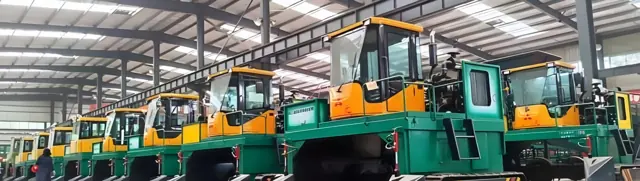
- RY-LFD Series Crawler Compost Turner
RY-LFD crawler turners mix and aerate composting windrows across several working widths. Start with windrow width, then check site access and the turning requirements of the selected model.
- RY-ZFP Standard Trough Compost Turner
The standard RY-ZFP series turns and mixes organic material in fixed composting troughs. The 40/50 and A/B combinations have different widths, working depths and main motor ratings, so selection begins with the trough geometry.
- Intelligent Aerobic Fermentation Tank
The aerobic fermentation tank combines a chamber, lifting feed system, aeration, hydraulics and biological odor treatment for manure and other organic materials. Compare chamber volume and the stated treatment quantity separately across the four sizes.
- Automatic Organic Fertilizer Batching System
The batching system coordinates recipe-based feeding of production materials and functional additives, with anti-bridging devices in the associated hoppers. Select hopper count, weighing and monitoring functions around the recipe and production schedule.
Frequently asked questions
What size organic fertilizer plant should I build?
Most plants are built for 5,000–100,000 t/yr. Base the size on local manure supply, market size and delivery radius. A 10,000 t/yr plant runs at about 1.5–2.5 t/h.
Should I make powder or granular fertilizer?
Powder needs less equipment and capital. Granules sell better in wider markets but need granulation, drying and cooling. Many plants start with powder and add granulation later.