
2026-11-12
Sheep manure as a fertilizer feedstock
Sheep drink little water, so their manure is dry and fine. It is a warm manure, between horse and cattle manure, and contains both fast-release and slow-release nutrients. Renyuan's production notes describe it as well suited to improving alkaline and poor soils.
| Component | Sheep manure | Sheep urine |
|---|---|---|
| Organic matter | 24–27% | about 5% |
| Nitrogen | 0.7–0.8% | 1.3–1.4% |
| Phosphorus | 0.45–0.6% | low |
| Potassium | 0.3–0.6% | 2.1–2.3% |
Windrow composting in about 10 days
- Mix the manure with crushed straw. The amount depends on the manure's moisture: a squeezed handful should hold together, show water between the fingers without dripping and fall apart when released. Add maize flour as a sugar source for the microbes, together with the inoculant.
- Mix thoroughly in a mixer, leaving no raw lumps.
- Form windrows 1.5–2 m wide and 0.8–1 m high, and turn them every 2 days.
- Day 2: the pile reaches 60–80 °C, killing E. coli and parasite eggs. Day 4: the odour is gone. Day 7: the pile is loose and dry, covered with white mycelium. Day 9: it smells like distillers' yeast. Day 10: the compost is mature.
- Dry slightly, crush with a semi-wet crusher, granulate, dry, screen and bag.
Trough composting for commercial production
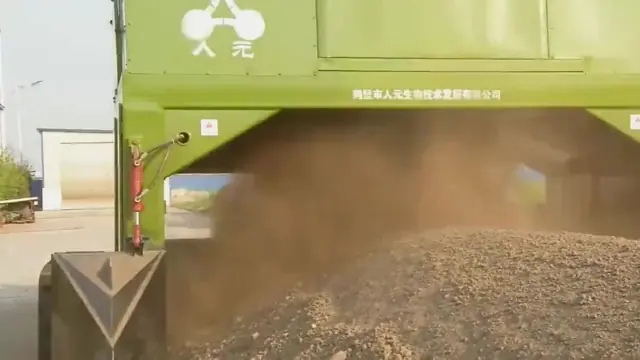
Trough composting is the usual method for commercial sheep manure fertilizer. It is not affected by weather or season, suits standardised production and keeps pollution low. Material is usually fully mature in about 15 days.
Troughs are typically 3–20 m wide, 0.8–1.5 m deep and 50–100 m long, depending on the turner and the site.
- Particle size under 10 mm; crush larger material.
- Moisture around 55–60%. Above 65% the trough often fails to start.
- Manure to bulking material about 3:1, using straw, corn stalks or peanut stems with a C:N ratio of 20–80:1.
- Expect 3–4 days to heat up (5–7 in winter). Turn when the pile holds 60–70 °C for 24 hours. The cycle is about 15 days in summer and 25 in winter.
- If the trough is still below 40 °C after 10 days, check moisture and the inoculant dose.
Matching equipment
Small sites usually start with windrows and a crawler turner. Plants that need steady year-round output move to troughs with a trough turner. Finishing follows the same sequence as for other manures: crushing, granulation, drying, screening and bagging.
Renyuan equipment for this line
- RY-LFD Series Crawler Compost Turner
RY-LFD crawler turners mix and aerate composting windrows across several working widths. Start with windrow width, then check site access and the turning requirements of the selected model.
- RY-ZFP Standard Trough Compost Turner
The standard RY-ZFP series turns and mixes organic material in fixed composting troughs. The 40/50 and A/B combinations have different widths, working depths and main motor ratings, so selection begins with the trough geometry.
- RY-FS60 Vertical Crusher
A vertical crusher for reducing fermented organic material before screening or further processing.
- Disc Granulator
Forms fertilizer granules in a rotating disc and connects with mixing and downstream finishing stages.
- Rotary Drum Dryer
A rotary dryer for fertilizer materials, arranged with a heat source and dust-collection equipment as required.
- RY-GS Trommel Screen
The trommel screen grades fertilizer material through a rotating screen. Use it after crushing for powder processing or in granule finishing, with apertures and recycle routes matched to the finished-product size.
Frequently asked questions
How long does sheep manure take to compost?
In windrows turned every 2 days, Renyuan's timeline shows mature compost by day 10. In troughs the cycle is about 15 days in summer and 25 in winter.
Does sheep manure need bulking material?
Yes. Mix in crushed straw or stalks to bring the moisture into range. A manure-to-bulking ratio of about 3:1 is typical in troughs.